Five Everyday Coffee Tools Worth Buying First
Words by Oliver Hart ·
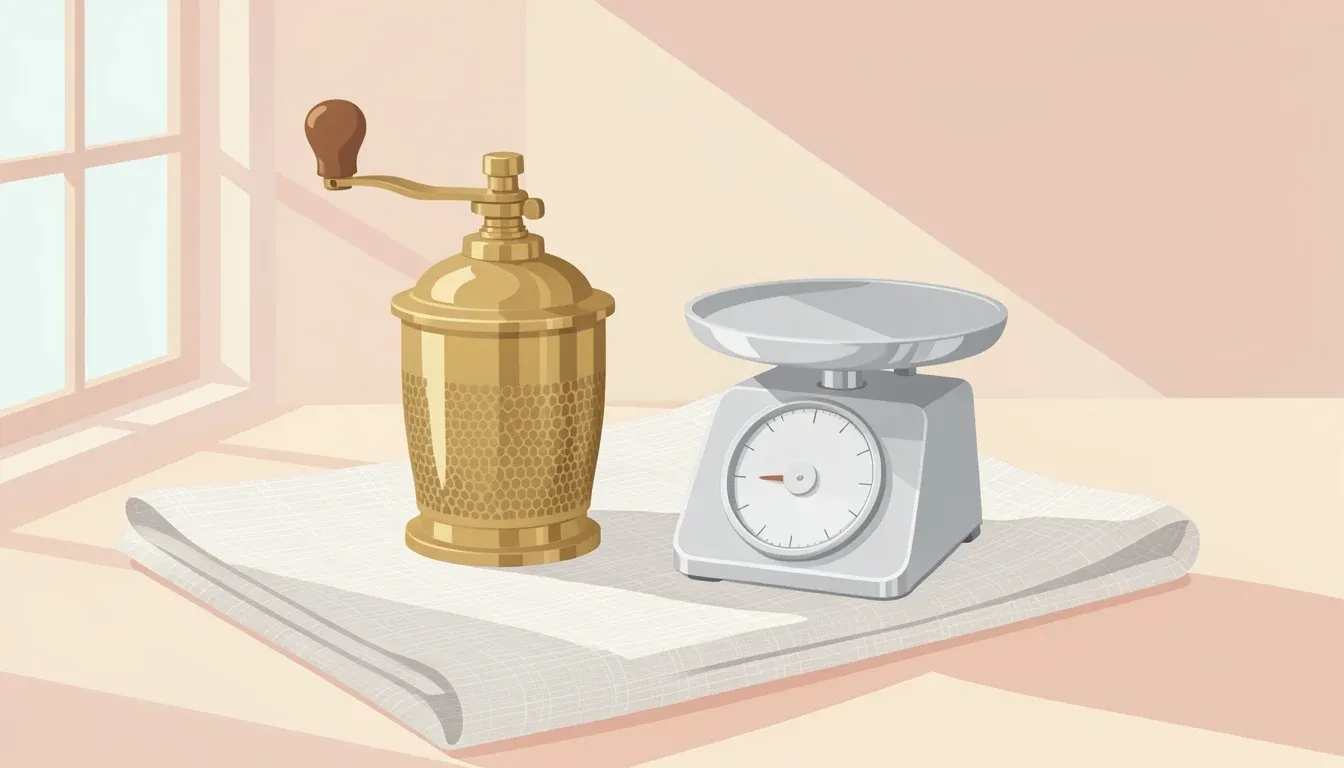
Start with the grinder
If you only buy one thing, make it a grinder that does the job properly. Pre-ground coffee loses aroma quickly once the bag is open, and no brewing technique can rescue a grind that is uneven in size.
- A burr grinder. Suits anyone who brews most days and wants the same coarseness from one cup to the next. Two abrasive burrs crush beans into a more even size than spinning blades do. The trade-off is cost and bulk. A decent one takes up counter space, and the hopper and chute need brushing out now and then, because old grounds go stale and can taint fresh ones.
- A hand grinder. Suits people with a small kitchen, anyone who makes only a cup or two at a time, or anyone who wants coffee on a trip. It is quiet and costs far less than an electric model. The trade-off is effort. Grinding enough for a pot by hand takes a few minutes of steady turning, and getting a fine, consistent grind for espresso is harder.
Measure and time the brew
Recipes that say "a scoop" depend on how full the scoop was. Weight does not change with the mood of the person holding the spoon.
- A digital scale that reads to 0.1 g. Suits anyone who has made a good cup once and wants to repeat it. A common starting point for filter coffee is around 15 to 17 grams of water for every gram of coffee, and a scale lets you hold that ratio day to day. The trade-off is one more thing to wipe down, and it only helps if you weigh the beans and water every time.
- A kitchen or phone timer. It costs nothing and suits everyone. Brew time is one of the main reasons a cup tastes bitter or flat, and a timer keeps you honest about it. The only real downside is remembering to start it, which is less of a chore than it sounds.
Water and the pour
- A gooseneck kettle. Suits anyone making pour-over coffee, where the narrow spout gives you control over where the water lands and how fast it flows. A kettle that holds a set temperature is also useful, since water straight off the boil can make some roasts taste harsh. The trade-off is price. If you mostly make French press or machine coffee, an ordinary kettle will do the job.
- A simple plastic or ceramic dripper with paper filters. Suits someone who wants a clean, bright cup without buying a machine. The dripper itself is cheap and easy to clean. Paper filters need a quick rinse with hot water before use, or they can leave a papery taste in the cup. The trade-off is the ongoing cost of filters and a routine that takes a little more attention than pressing a button.
Keep the beans and the milk in order
- An opaque airtight container. Suits anyone who buys beans in bags and keeps them in a cupboard for more than a few days. Air and light both work against coffee, so a container that seals well and blocks light helps. The trade-off is that it is only a container. It cannot make old beans taste fresh, so you still need to buy recently roasted coffee and use it within a few weeks.
- A small stainless steel milk jug. Suits anyone making milk drinks at home with a steam wand or a handheld frother. Stainless holds heat better than thin jugs and is easier to keep clean. The trade-off is that good microfoam still takes practice, and a jug on its own will not fix milk that has been left out too long.